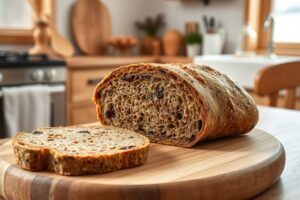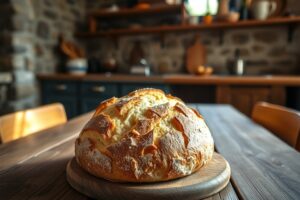
Galician rye wheat bread is still a pillar of what we eat and love in Galicia, a region where each crusty, aromatic loaf carries centuries of baking tradition. I often think about how those golden skins hide a whole story of grain, water, and patient fermentation. This piece walks through the craft of reproducing that authentic crumb and flavor, zeroing in on exact flour ratios, picking the right native rye and wheat types, and letting the dough rise slowly so the bread can develop its deep, rustic character. Whether you’re a home baker trying to capture the spirit of regional ovens or a professional looking to fine‑tune your method, balancing ingredients, choosing the right grains, and managing a sourdough starter are the core steps you can’t skip. Below you’ll find practical examples, timing cues, and seasoned advice that reflect NoePan’s dedication to handcrafted, organic sourdough baked in stone ovens.
Understanding the Traditional Recipe: Flour Proportions and Ingredients
The classic Galician rye wheat loaf follows a simple yet precise formula that honors the grain’s natural qualities. In practice, I mix 70 % whole rye flour with 30 % wheat flour—often a blend of torta or bollería wheat because it packs more protein. Sea salt comes in at a modest 2‑3 % of the total weight. The rye supplies plenty of fiber and little gluten, while the wheat adds elasticity, giving the crumb that open yet resilient texture we recognize. For each kilogram of flour I aim for 600‑650 ml of water at 20‑22 °C; the dough should feel slightly sticky but still manageable.
Key Ingredient Details
- Rye Flour: Stone‑ground rye keeps the germ and bran intact, which brings those earthy notes into the final loaf.
- Wheat Flour: I prefer organic, low‑extraction wheat; it keeps the crumb light while still providing structure.
- Water: Filtered, cool water hydrates everything evenly; a splash of mineral‑rich spring water can add a subtle minerality.
- Salt: Sea salt does more than season—it strengthens gluten networks and moderates yeast activity.
When I work, I blend the rye and wheat flours first, before any water hits. That spreads the protein evenly throughout the batch. I also keep the dough temperature steady, aiming for a final proof around 24‑26 °C. A small starter of NoePan’s organic sourdough—about 10 % of the total flour—feeds the tradition and deepens the loaf’s complexity.
Choosing the Right Grains: Rye and Wheat Varieties for Authentic Flavor
The flavor profile of Galician rye wheat bread really hinges on which grains you choose. In my experience, two rye strains dominate the scene. “Negro de Galicia” delivers deep, smoky undertones, while “Blanco del Miño” offers a milder, sweeter note. For wheat, heritage options like Torta de Santiago or Trigo Blanco de Lugo give the needed protein (roughly 10‑12 %) without overwhelming the nutty character that balances the rye.
Selecting the Best Sources
- Stone‑ground, organic flours preserve enzymes and the germ, which is why I always ask for them.
- Store flours in a cool, dark spot; whole grains stay fresh longer than refined ones.
- I often start with an 80/20 rye/wheat blend for a classic taste, then shift to 70/30 when I want a stronger rye presence.
When I source, I ask millers about extraction rates. If they have “integral” versus “parcialmente integral” rye, I go for the integral to get maximum fiber and flavor. NoePan gets these specific varieties straight from local organic farms, so each batch feels true to the region.
Servidores VPS en España
VPS con NVMe, tráfico ilimitado y panel de control. Desde 9,95€/mes.
Ver servidores VPS →Fermentation Techniques: Managing Time, Temperature, and Sourdough Culture
Fermentation is where the soul of Galician rye wheat bread shows up. I follow a two‑step approach—a preferment (poolish) and then a main fermentation. This lets the rye’s complex sugars develop fully while keeping gluten relaxation under control. I start a poolish with 20 % of the total flour and 50 % water, stir until smooth, then let it sit at room temperature (20‑22 °C) for 12‑18 hours. When bubbles appear and a gentle sour aroma forms, I know it’s ready.
Timing & Temperature Guidelines
- Poolish: Mix, stir until smooth, cover, and rest 12‑18 h.
- Main Dough: Combine the poolish with the remaining flour, water, and salt; knead until cohesive (about 8‑10 minutes).
- First Proof: Bulk ferment 1‑2 h at 24‑26 °C, then give it a cold retard in the fridge (≤4 °C) for 12‑18 h to deepen flavor.
- Shaping & Final Proof: Divide, shape, and let rise 2‑3 h at 24‑26 °C.
To keep a robust sourdough culture I maintain a 1:1:1 ratio of rye flour, wheat flour, and water. I refresh it weekly with a portion of the starter so the wild yeasts stay active. That cold retard not only adds flavor but also improves digestibility—key traits of NoePan’s artisanal method. After the final proof, I bake in a preheated stone oven at 260 °C for 30‑35 minutes, letting steam give the crust a glossy finish that locks in all those aromatic notes.
Stone Baking Essentials: Preparing the Stone and Achieving the Perfect Crust
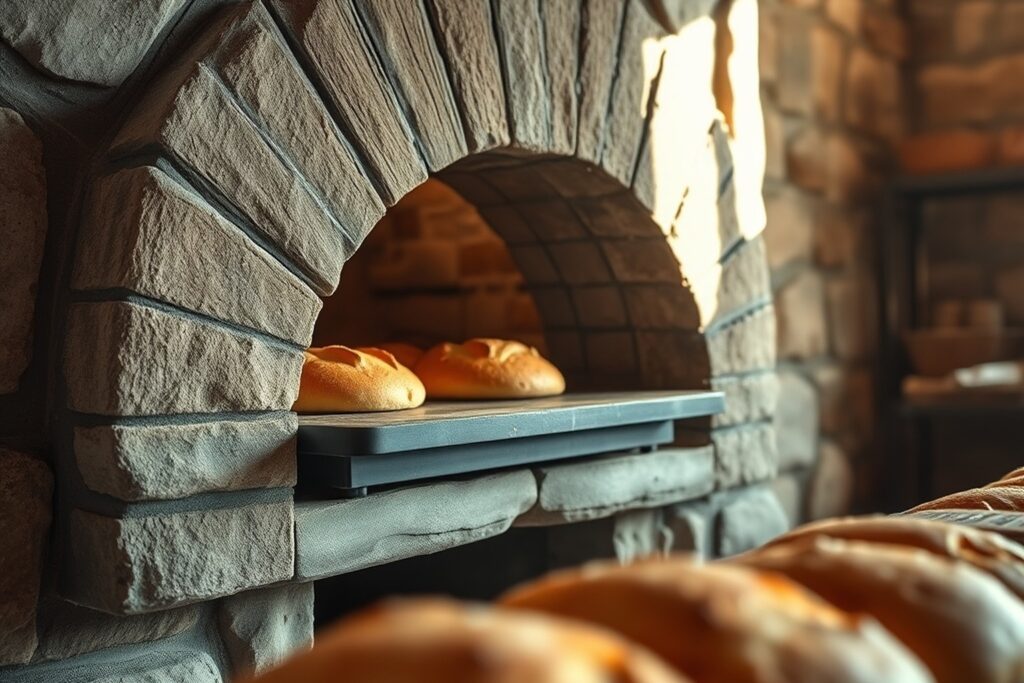
When you bake Galician rye wheat bread, start by sweeping away any grit and scraping off burnt bits; a clean surface lets heat spread evenly. Then preheat the stone for at least 45 minutes at 260 °C (500 °F) so it can hit thermal equilibrium—this steadiness drives the quick steam burst that gives NoePan’s signature glossy crust.
Preparing the Stone
- Put the stone in the middle of the oven, leaving about a 2‑cm gap all around it so air can flow evenly.
- Check the temperature with a probe; when it reads 260 °C you know it’s ready to go.
Pro tip: Want a deeper crust? Scatter a pinch of coarse sea salt on the stone before you slide the bread on. The salt pulls moisture out and helps the sugars brown.
Now that the stone is scorching hot, lift the basket with the dough onto a sheet of parchment. Score the top with a sharp lame to guide how it spreads, then set the dough down. That immediate contact gives the crackle and glossy skin that marks real Galician rye wheat bread.
Step‑by‑Step Baking Process: Crafting Galician Rye Wheat Bread
Baking is a delicate dance of timing, heat, and steam. Stick to these steps if you want to match the artisanal feel of NoePan’s sourdough breads.
-
Bread into the Oven (0:00‑0:02)
Crack the door for about ten seconds, then slide the parchment‑wrapped dough onto the hot stone. That short burst traps steam and starts building the crust.
-
Steam Management (0:03‑5:00)
Keep the door shut for the first five minutes so humidity stays high. If you have a water pan, drop a cup of hot water in to crank up the steam even more.
-
Temperature Shift (5:00‑30:00)
Once those first five minutes are up, crack the door a bit to let steam escape, which helps the crust firm up while the inside finishes cooking. Hold the heat at 260 °C for a total bake of 30 to 35 minutes.
-
Final Crust Development (30:00‑35:00)
During the final five minutes the skin should turn a deep amber, and the internal temp should climb to 96 °C (205 °F). Take the loaf out, set it on a cooling rack, and let it rest at least half an hour before you slice.
FAQ: Do I still need to preheat the stone on a regular oven?
Absolutely. Preheating for at least 45 minutes gets the stone to the right temp and gives you that consistent heat for a great crust.
When you honor each stage—getting the stone ready, managing steam, and timing everything right—you’ll end up with that artisanal crumb and crust NoePan gets with organic flours and old‑school sourdough starters.
Conclusion: Enjoying Your Homemade Galician Rye Wheat Bread
Stone baking rewards you not just with a glossy loaf that smells amazing when it emerges, but also with the satisfaction of mastering a technique that links you to Galicia’s baking heritage. When you cut into it, you’ll find a loaf that carries the deep rye notes, the gentle wheat sweetness, and the rich flavor from natural sourdough—exactly the qualities that define NoePan’s craft. Serve it warm with a splash of local olive oil, a dollop of artisanal cheese, or alongside a hearty Galician stew. Take a moment to feel the snap of the crust, the give of the crumb, and the whole aroma that only a stone‑baked, hand‑made loaf can give. This is the moment you’ve been working toward—a homemade Galician rye wheat bread worth sharing.
Te puede interesar:
Noticias de Galicia — Galicia Universal — periódico digital